为什么营养学总在强调 Omega-3?它真正影响的,远不止心血管
Omega-3 吃进身体,就等于被吸收利用了吗?答案可能没那么简单。作为脂溶性营养素,它需要经过乳化、分解与转运,才能真正被人体吸收。当技术尝试让亲油的 Omega-3 更好地分散于水,改变的究竟只是剂型,还是营养利用效率?从“补了多少”到“身体用了多少”,带你重新理解 Omega-3 的吸收与生物利用度 Does taking Omega-3 mean your body actually absorbs and uses it? The answer may be more complicated than it seems. As a fat-soluble nutrient, Omega-3 must undergo emulsification, digestion, and transport before it can be absorbed. When new technologies help oil-loving Omega-3 disperse more effectively in water, are they simply changing its formulation—or potentially improving its bioavailability? It is time to shift the conversation from “How much are we taking?” to “How much can the body actually use?”
我们谈营养,常常先问:“每天应该吃多少?”
但从营养学的角度看,摄入量只是故事的开头。真正值得追问的是:它能否顺利经过消化、吸收与转运,最终抵达身体可以利用的位置?
Omega-3 就是一个很有代表性的例子。
作为一类脂溶性脂肪酸,Omega-3 进入人体后,需要经历乳化、脂肪酶分解、形成混合胶束,再被肠道吸收。换句话说,它并不是“吞下去”就等于“利用了”。食用方式、产品形态、脂质结构、颗粒大小,以及个体的消化能力,都可能影响这段旅程。
日常饮食中,以下是比较常见的十种富含 Omega-3 的食物:
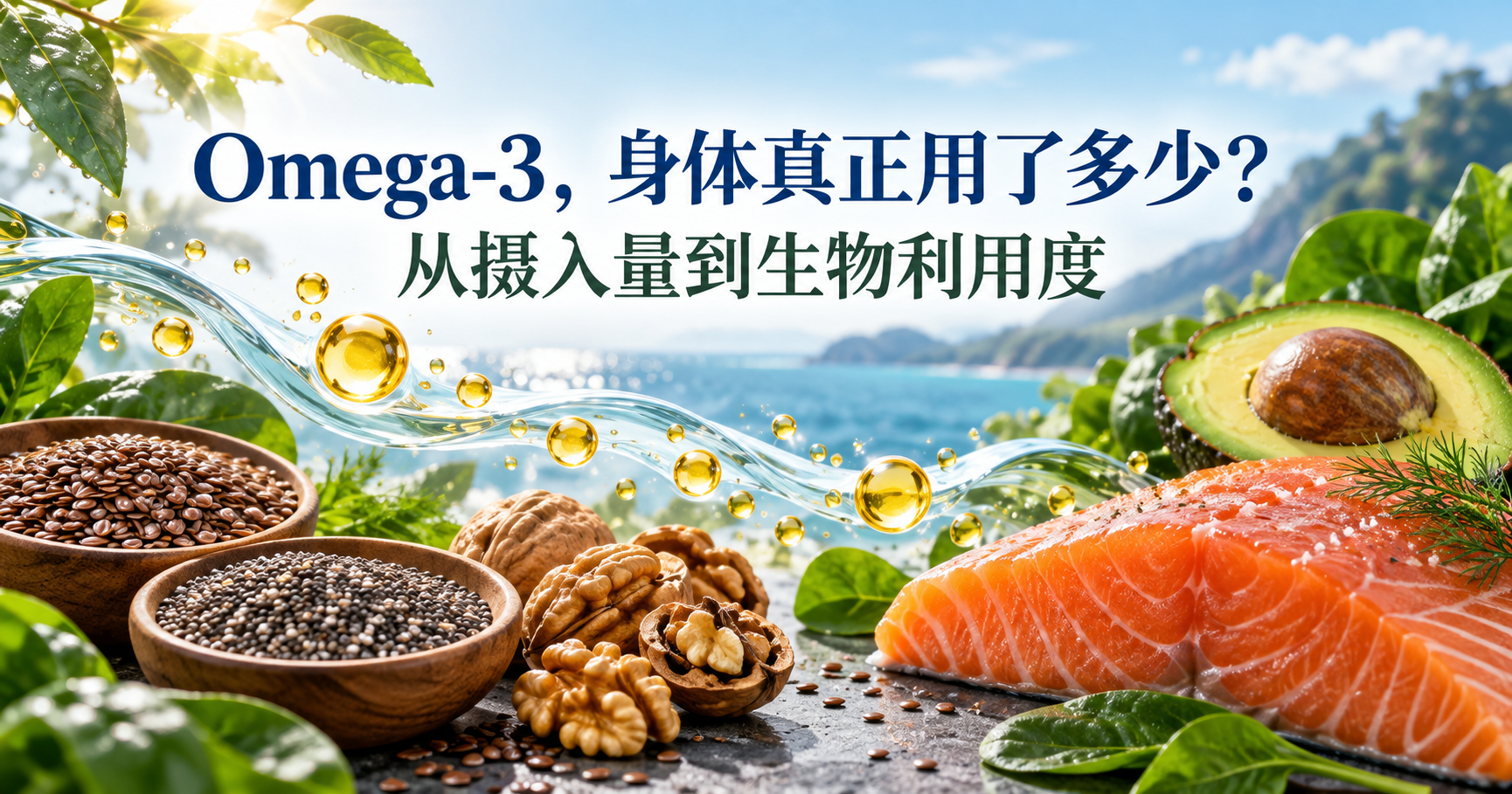
1. 三文鱼:富含 EPA 和 DHA,是较常见的海洋鱼类来源。 2. 沙丁鱼:体型较小,Omega-3 含量较丰富,也通常含有维生素 D。 3. 鲭鱼:脂肪含量较高,能够提供较多 EPA 和 DHA。 4. 鳟鱼:尤其是养殖或淡水鳟鱼,也是较方便获取的鱼类来源。 5. 虾:含有一定量的 EPA 和 DHA,适合搭配日常饮食。 6. 亚麻籽:富含植物来源的 ALA,可以加入燕麦、酸奶或沙拉中。 7. 奇亚籽:含有较丰富的 ALA,同时还提供膳食纤维。 8. 核桃:是常见的植物性 Omega-3 来源,适合作为零食或加入早餐。 9. 大豆及豆制品:大豆含有一定量的 ALA,豆腐、无糖豆浆等都可以纳入日常饮食。 10. 海藻及海藻油:部分海藻能够提供 DHA,海藻油也常被用于植物性 Omega-3 补充产品。
需要注意的是,鱼类和海藻类主要提供 EPA、DHA;亚麻籽、奇亚籽、核桃和大豆等植物性食物主要提供 ALA。ALA 在人体内可以转化为 EPA 和 DHA,但转化效率通常有限,因此不同来源不能简单地视为完全等价。与此同时,鱼类的选择还应关注新鲜度、烹调方式以及污染物风险,坚果和种子则应注意适量摄入,因为它们的能量密度较高。
这也引出了一个值得思考的问题:
既然人体的大部分消化环境以水为基础,能否通过乳化、微囊化或其他递送技术,让原本亲油的 Omega-3 更均匀地分散,从而增加它与消化酶及肠道吸收界面接触的机会?
这里需要分清两个概念:水分散性提高,并不意味着 Omega-3 在化学性质上真正变成了水溶性;技术改善的是它在消化环境中的呈现方式。至于这种改变能否真正转化为更高的生物利用度,还要结合具体剂型、人体研究和实际使用场景来判断。
所以,选择一种营养补充形式时,我们或许不应只看标签上“含有多少”,还应该继续追问:
身体实际能够吸收多少? 吸收之后,又有多少能够被有效利用? 从“含量思维”走向“利用度思维”,可能正是理解现代营养学的重要一步。
When we talk about nutrition, one of the first questions we often ask is: “How much should we consume each day?”
From a nutritional perspective, however, intake is only the beginning of the story. The more important question is whether a nutrient can be properly digested, absorbed, and transported—and ultimately reach the places where the body can use it.
Omega-3 fatty acids offer a compelling example.
As fat-soluble fatty acids, Omega-3s must undergo emulsification, enzymatic digestion by lipases, and incorporation into mixed micelles before they can be absorbed by the intestine. In other words, simply swallowing Omega-3 does not necessarily mean the body can fully utilize it. How it is consumed, its formulation and lipid structure, particle size, and an individual’s digestive capacity may all influence this journey.
The following are ten common dietary sources of Omega-3:
1. Salmon: Rich in EPA and DHA, salmon is one of the most widely consumed marine sources of Omega-3. 2. Sardines: These small fish contain substantial amounts of Omega-3 and are also generally a good source of vitamin D. 3. Mackerel: With its relatively high fat content, mackerel can provide significant amounts of EPA and DHA. 4. Trout: Farmed and freshwater trout are also convenient and accessible sources of Omega-3. 5. Shrimp: Shrimp provides modest amounts of EPA and DHA and can easily be incorporated into a balanced diet. 6. Flaxseeds: Rich in the plant-based Omega-3 fatty acid ALA, flaxseeds can be added to oatmeal, yogurt, or salads. 7. Chia seeds: Chia seeds provide a generous amount of ALA as well as dietary fiber. 8. Walnuts: A familiar plant-based source of Omega-3, walnuts can be eaten as a snack or added to breakfast. 9. Soybeans and soy products: Soybeans contain some ALA, making foods such as tofu and unsweetened soy milk useful additions to the daily diet. 10. Algae and algal oil: Certain algae contain DHA, while algal oil is commonly used in plant-based Omega-3 supplements.
It is important to recognize that fish and certain algal sources primarily provide EPA and DHA, whereas plant foods such as flaxseeds, chia seeds, walnuts, and soybeans mainly provide ALA. Although the body can convert ALA into EPA and DHA, this conversion is generally limited. These sources should therefore not be considered fully interchangeable.
When choosing fish, it is also important to consider freshness, cooking methods, and the potential risk of environmental contaminants. Nuts and seeds should be consumed in moderation because of their relatively high energy density.
This leads to another intriguing question:
Because much of the human digestive environment is water-based, could emulsification, microencapsulation, or other delivery technologies help oil-loving Omega-3 disperse more evenly—thereby increasing its contact with digestive enzymes and the intestinal absorptive surface?
Here, two concepts must be clearly distinguished. Improved water dispersibility does not mean that Omega-3 has chemically become water-soluble. Rather, these technologies change how it is presented within the digestive environment. Whether this ultimately results in greater bioavailability depends on the specific formulation, evidence from human studies, and the context in which it is used.
When choosing a nutritional supplement, therefore, perhaps we should look beyond the amount stated on the label and ask two further questions:
How much can the body actually absorb?
And once absorbed, how much can it effectively use?
Moving from an “amount consumed” mindset to a “bioavailability” mindset may be an important step toward a more sophisticated understanding of modern nutrition.